
Manager Newsletter / June 2026

Listening for Understanding
Listening is often viewed as a passive skill - something that happens naturally in the flow of conversation. But in leadership, listening is an active choice. It requires curiosity over assumption, presence over distraction, and a willingness to understand before seeking to be understood. For managers, how we listen shapes the quality of our relationships, the strength of our teams, and the decisions we make.
Without intentional listening, it's easy to hear only enough to respond, solve, or move on to the next task. But when managers take the time to truly understand the perspectives, concerns, and ideas of those around them, they build trust and uncover insights that might otherwise remain hidden. Listening well helps people feel valued, increases engagement, and often leads to better outcomes for everyone involved.
That's where managerial influence comes in: not just in communicating expectations, but in creating an environment where people feel heard. Great managers ask thoughtful questions, resist the urge to jump to conclusions, and make space for honest dialogue. This month's newsletter is about listening to understand - why it matters, what gets in the way, and how strengthening this skill can help you lead with greater empathy, clarity, and connection.
Onward and upward,
Jesse Heath / Employee Relations Coordinator

Feeling Burned Out? Address Your Stress.
Feeling overwhelmed, exhausted, distracted, or constantly on edge? Stress could be affecting more areas of your life than you realize. Join us for an eye-opening session that uncovers the causes of stress and gives you strategies to feel more focused and in control.
Here's what you'll discover:
- How stress affects your health, productivity, and relationships
- Simple techniques to reduce stress and prevent burnout
- Practical tools you can start using immediately
- The surprising stress triggers impacting your daily life
Listening to Understand - The Leadership Skill That Builds Trust
In higher education, managers spend a significant amount of time communicating: leading meetings, answering questions, navigating concerns, and sharing information. Yet one of the most influential leadership skills isn't speaking at all - it's listening.
Active listening goes beyond simply hearing words. It's the intentional practice of seeking to understand another person's perspective before responding. On a college campus, where managers regularly interact with staff, students, and colleagues from diverse backgrounds and experiences, this skill can strengthen relationships, improve decision-making, and foster a greater sense of belonging.
 Unfortunately, listening often competes with other demands. Managers may find themselves multitasking during conversations, mentally preparing their response, or jumping too quickly into problem-solving mode. While these instincts are understandable, they can unintentionally send the message that people are not being fully heard. Over time, that perception can erode trust and discourage employees from speaking candidly.
By contrast, managers who listen actively create an environment where employees feel valued and respected. They ask follow-up questions, seek clarification, and reflect back what they've heard to ensure understanding. This doesn't mean agreeing with everything that is shared; it means demonstrating genuine curiosity and openness. Employees are often more willing to embrace change, navigate conflict, and contribute new ideas when they believe their perspectives have been considered.
Active listening is particularly important during periods of transition or stress. Whether navigating staffing changes, responding to student concerns, or preparing for a new academic year, people want to know that their voices matter. Managers who pause to understand before they act are often better equipped to lead with both empathy and effectiveness.
Listening to understand is not a passive act - it's a leadership practice. And like any leadership skill, it can be developed with intention and consistency.
Actionable Takeaways
Remove Distractions.
Close your laptop, silence notifications, and maintain eye contact when possible. Being fully present communicates respect and attention.
Practice the 80/20 Rule
Aim to listen 80% of the time and speak 20% of the time during 1:1 meetings. Create space for employees to share their thoughts before offering advice or solutions.
Reflect Before Responding.
Summarize what you've heard using phrases like, "What I'm hearing is..." or "It sounds like..." This helps prevent misunderstandings and signals that you are engaged in the conversation.
Resist the Urge to Solve the Problem.
Sometimes employees are seeking understanding, not answers. Ask, "Would you like me to listen, help you think through options, or problem-solve together?"
Ask One More Question.
When you think you understand the issue, ask a follow-up question such as, "Can you tell me more about that?" or "What do you think is contributing to this?" Often, the most important information comes after the initial response.
Get Comfortable with Silence.
After asking a question, resist the urge to fill the pause. People often need a few extra moments to gather their thoughts, especially when discussing complex ideas or sensitive topics. Allowing silence communicates patience and respect - and can lead to more thoughtful, honest responses.
Team Activity: The Listening Loop
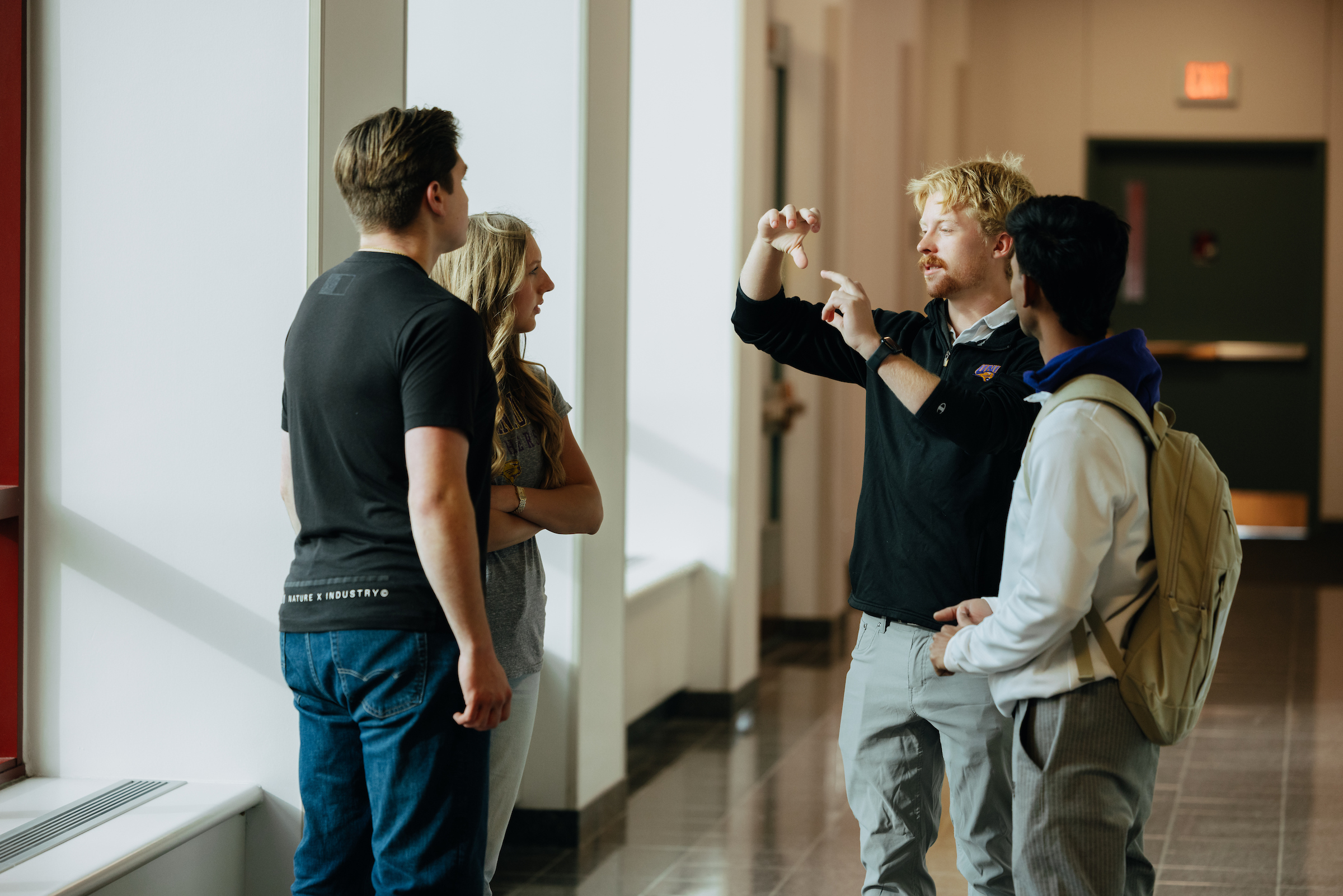 Use this 15-minute exercise during a staff meeting to strengthen active listening skills.
- Divide team members into pairs.
- Give each person two minutes to answer a prompt such as:
- What's one challenge you've faced this semester?
- What's something that has energized you at work recently?
- While one person speaks, the listener cannot interrupt, offer advice, or share their own experiences.
- After two minutes, the listener has one minute to summarize what they heard, beginning with: "What I heard you say is..."
- The speaker then shares whether they felt accurately understood and clarifies anything that was missed.
- Switch roles and repeat.
Conclude by asking the group:
- What made you feel listened to?
- What was challenging about only listening?
- How might this practice improve our everyday interactions?
Strong teams are built on understanding, and understanding begins with listening.

We think we listen, but very rarely do we listen with real understanding, true empathy. Yest listening, of this very special kind, is one of the most potent forces for change that I know.
Additional Resources
Qualities of a Good Listener and How To Be One in 6 Steps Indeed
"Being a good listener, often referred to as "active listening," allows you to build relationships and ensure understanding with your coworkers. Although listening seems like an intuitive ability, there are several things you can do to improve your listening skills."
The Power Of Listening: Building Bridges And Fostering Collaboration Forbes
"Organizations that excel in listening are often those that successfully break down silos, unify efforts and leverage collective intelligence to adapt swiftly to changes and challenges."
Leadership-Level Listening: 3 Skills to Build, 4 Bad Habits to Break SHRM
"Leadership-level listening requires new mental models and deliberate practice, but it may be the secret superpower behind continued advancement. Great leaders are expert listeners."

How to Be a Better Listener (3:04)
Effective listening requires more than hearing words. By giving full attention, asking clarifying questions, reflecting back what was heard, and confirming next steps, managers can build trust, reduce misunderstandings, and strengthen communication across their teams.
The Art of Active Listening (7:38)
You might think you’re a good listener, but common behaviors like nodding and saying “mm-hmm” can actually leave the speaker feeling unheard or dismissed. The truth is that mastering the art of listening involves a whole host of other skills as well. You need to do more.
How to Actively Listen to Others (14:31)
In this talk, Scott Pierce shows us that “Yes, and” is not just the first rule of improv, but it also touches on deeper lessons that we can apply to our everyday lives. Pierce worked as a software developer for a variety of companies before taking a technology leadership position at of one of the South’s largest ad agencies.

Active Listening for Better Leadership Communication
Even as new technologies have prompted radical changes in the world of work, basic interpersonal communication skills remain as critical as ever. Heather Younger shares her five-step framework for active listening and explains how to discern passive listening from active listening, detect and respond to common nonverbal cues, and demonstrate curiosity and empathy when actively listening. She also shares specific tactics to help you become more present, expand your decision-making circle, and properly communicate the connection between team feedback and the actions you take based on that feedback. Tune in to take the first steps towards becoming a better listener and leader.

Qualities of a Good Listener and How To Be One in 6 Steps Indeed
"Being a good listener, often referred to as "active listening," allows you to build relationships and ensure understanding with your coworkers. Although listening seems like an intuitive ability, there are several things you can do to improve your listening skills."
The Power Of Listening: Building Bridges And Fostering Collaboration Forbes
"Organizations that excel in listening are often those that successfully break down silos, unify efforts and leverage collective intelligence to adapt swiftly to changes and challenges."
Leadership-Level Listening: 3 Skills to Build, 4 Bad Habits to Break SHRM
"Leadership-level listening requires new mental models and deliberate practice, but it may be the secret superpower behind continued advancement. Great leaders are expert listeners."
How to Be a Better Listener (3:04)
Effective listening requires more than hearing words. By giving full attention, asking clarifying questions, reflecting back what was heard, and confirming next steps, managers can build trust, reduce misunderstandings, and strengthen communication across their teams.
The Art of Active Listening (7:38)
You might think you’re a good listener, but common behaviors like nodding and saying “mm-hmm” can actually leave the speaker feeling unheard or dismissed. The truth is that mastering the art of listening involves a whole host of other skills as well. You need to do more.
How to Actively Listen to Others (14:31)
In this talk, Scott Pierce shows us that “Yes, and” is not just the first rule of improv, but it also touches on deeper lessons that we can apply to our everyday lives. Pierce worked as a software developer for a variety of companies before taking a technology leadership position at of one of the South’s largest ad agencies.
Active Listening for Better Leadership Communication
Even as new technologies have prompted radical changes in the world of work, basic interpersonal communication skills remain as critical as ever. Heather Younger shares her five-step framework for active listening and explains how to discern passive listening from active listening, detect and respond to common nonverbal cues, and demonstrate curiosity and empathy when actively listening. She also shares specific tactics to help you become more present, expand your decision-making circle, and properly communicate the connection between team feedback and the actions you take based on that feedback. Tune in to take the first steps towards becoming a better listener and leader.
FLSA/Time Reporting
Virtual - June 18 from 1:00-2:30pm on Zoom
Virtual - August 12 from 9:30-11:00am on Zoom
Supervisors of non-exempt (hourly) staff will learn about the requirements of the Fair Labor Standards Act (FLSA) and UNI time reporting. It is a manager's role to ensure compliance with these regulations; this session is being offered to support managers in this area.
Virtual Workshop Registration →
FMLA and ADA Manager Responsibilities
Provides managers with high-level information about how to identify a potential leave or accommodation request from an employee and their role in complying with the Family & Medical Leave Act and the Americans with Disabilities Act. Human Resource Services recommends managers complete this training upon hire and annually thereafter; however, this training session is available on-demand and may be taken as needed through Blackboard.
On-Demand Workshop →
Our Vision
All employees will be positively engaged in achieving their greatest potential while contributing to the success of the university.
Our Mission
Human Resource Services fosters and environment of integrity and collaboration through innovative solutions and communications contributing to the successful recruitment, development, and retention of university employees.