
Manager Newsletter / November 2026

Leading Through Service
As the holidays approach, it’s an ideal time to think about how we can contribute to the people and communities around us. Service learning and volunteering offer opportunities to step outside our day-to-day responsibilities, share our time and talents, and better understand the needs of those we serve. Sometimes, making an impact starts simply by finding a place where we can lend a hand.
For managers, service can enhance learning and skill development and can also be a powerful way to model the kind of engagement we want to see in others. Getting involved on campus, supporting a community organization, or encouraging employees to pursue meaningful volunteer opportunities can build our knowledge and skills, strengthen connections, and remind us that our work is part of something larger than ourselves.
That’s where leading through service comes in: using our time, skills, and influence to make a positive difference. Great managers recognize that leadership isn’t limited to what happens within the walls of the workplace. They look for opportunities to learn, serve, encourage others to get involved, and create connections between their work and the communities they are part of. This month’s newsletter explores service learning and volunteering - and how managers can find meaningful ways to contribute at UNI, throughout the Cedar Valley, and beyond.
Onward and upward,
Jesse Heath / Employee Relations Coordinator
Your Time Makes a Difference
Service doesn’t always look like signing up for a traditional volunteer opportunity. Sometimes it means giving an afternoon to a community organization. Sometimes it means joining a committee, helping plan a campus event, mentoring a colleague, or lending your expertise to a project that benefits others. Wherever it happens, service is an opportunity to use our time, skills, and relationships to contribute to something larger than ourselves.
 UNI has a strong tradition of connecting learning, service, and community. The inaugural Day of Service in 2026 demonstrated what is possible when Panthers come together with a shared purpose. Nearly 2,500 UNI students, faculty, and staff participated in more than 80 service projects throughout Cedar Falls, Waterloo, and surrounding communities. Through course-connected service in areas such as GIS mapping, education, health sciences, and the arts, learning translated directly into meaningful community impact. The next Day of Service will take place on Wednesday, April 7, 2027, continuing what will become an annual opportunity to serve the communities that help UNI thrive.
There are also opportunities to get involved throughout the year. On November 17, UNI’s Office of Community Engagement and the Volunteer Center of Cedar Valley will host the Cedar Valley Collaboration Forum, bringing UNI faculty, staff, and students together with local organizations and agencies to explore opportunities for meaningful community partnerships. And on January 18, 2027, MLK Day: Pack the Dome will bring the UNI community together in partnership with the Northeast Iowa Food Bank and Volunteer Center of Cedar Valley to support food security across the region.
Service doesn’t have to happen through a large university initiative, either. Consider joining a campus committee, helping with an event, supporting a student organization, volunteering with a local nonprofit, mentoring, or sharing a skill that could benefit an organization in the Cedar Valley. For managers, participating in service can also model the importance of engagement and encourage employees to find meaningful ways to contribute.
The goal isn’t to add another obligation to an already busy schedule. It’s to consider where your time and talents could be useful. This month, look for one opportunity to step outside your normal routine and serve your campus or community. The time you give may make a difference for someone else - and it may give you new relationships, perspectives, and a stronger connection to the community you call home.
Resource Highlight: Board Match Program
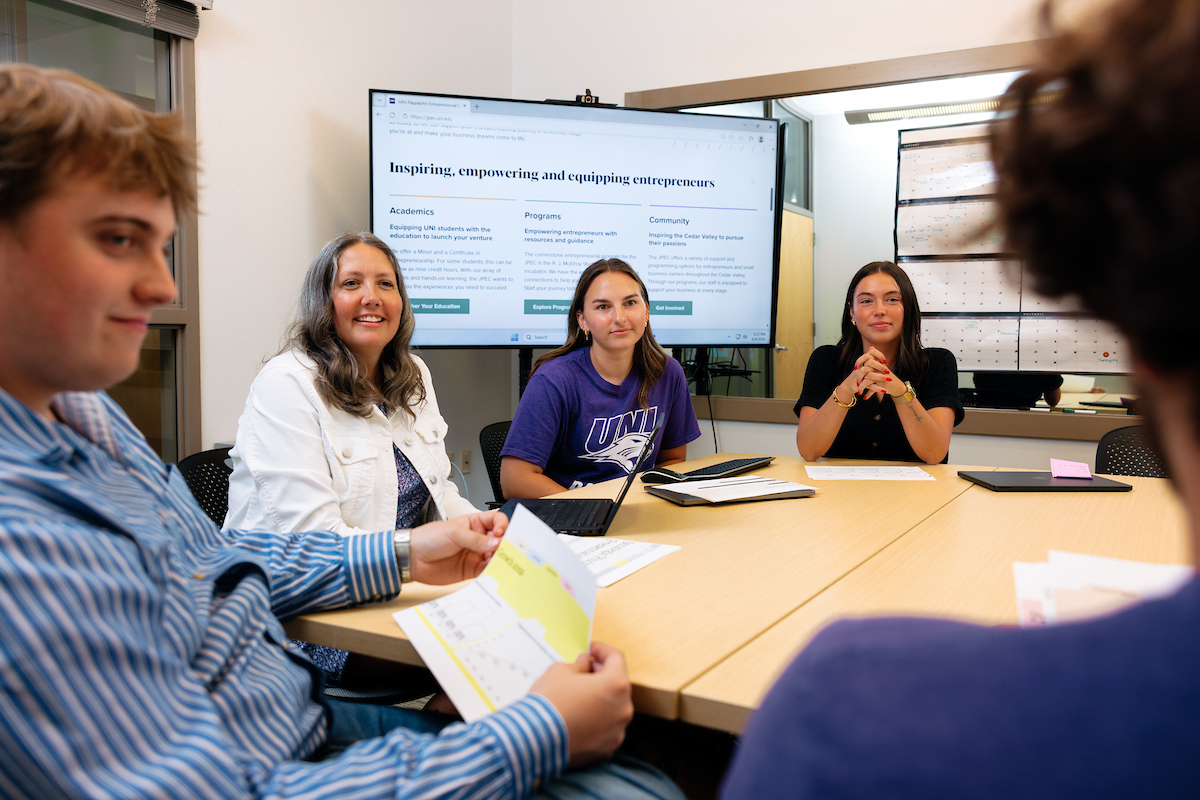 UNI's Office of Community Engagement, in partnership with the Volunteer Center of Cedar Valley, can assist faculty, staff and students in finding a nonprofit organization for which to serve on their board of directors. In addition, for nonprofit organizations seeking a university faculty, staff or student, a list of UNI individuals who have indicated interest in serving is available.
The interest form helps connect prospective volunteers with nonprofit board opportunities by collecting information about their background, interests, and skills. Applicants share their professional experience, volunteer history, and areas of expertise such as fundraising, marketing, governance, or technology. Organizations use this information to identify volunteers whose interests, experience, and competencies align with board needs.
Actionable Takeaways
Find one way to contribute on campus.
Join a university committee, help plan an event, support a campus initiative, or volunteer your skills for a project outside your usual responsibilities.
Connect with the Cedar Valley.
Attend the Cedar Valley Collaboration Forum on November 17 to learn about local organizations, explore partnership opportunities, and identify ways to get involved beyond UNI.
Put a service opportunity on your calendar.
Look ahead to MLK Day: Pack the Dome on January 18, 2027, or UNI’s Day of Service on April 7, 2027, and plan how you or your team might participate.
Make service part of your team's culture.
Share volunteer opportunities with employees, encourage participation when schedules allow, and recognize the contributions people make to the campus and broader community.
Case Study
Making Service Part of the Team
 Josephine is a manager at the University of Northern Iowa who wants their team to feel connected to the university's broader mission, not just the day-to-day responsibilities of their department. Between deadlines, staffing needs, and competing priorities, however, finding time for activities outside regular work can be challenging.
After learning about opportunities to get involved in the Cedar Valley, including the upcoming Cedar Valley Collaboration Forum and the 2027 Day of Service, Josephine sees an opportunity for the team to contribute to the community, build relationships beyond their department, and connect their work to something larger than themselves.
At the next team meeting, Josephine shares these opportunities and encourages employees to consider participating. The responses are mixed. One employee is excited about volunteering, another is concerned about falling behind on their workload, and a third questions whether community service should be a priority when the department already has so much to accomplish.
Josephine wants to encourage service and community engagement without making employees feel obligated to participate or creating additional pressure on the team.
Reflection Questions
- How should Josephine respond to employees who are hesitant about participating in service opportunities?
- What steps could Josephine take to make volunteering or community engagement realistic given the team's workload and responsibilities?
- How can Josephine encourage participation without making employees feel that volunteering is an expectation or requirement?
- What is one practical way Josephine could help the team connect its work at UNI with the needs of the broader Cedar Valley community?
The Leadership Takeaway
Leading through service isn't about requiring employees to volunteer or adding another initiative to an already full schedule. It's about modeling community engagement, making opportunities visible, and helping employees find meaningful ways to contribute when they are able. Managers can foster a culture where service is encouraged, individual choices are respected, and giving back becomes an opportunity to strengthen connections within the team and throughout the community.
LEAD UNI Podcast
Leadership is everywhere. LEAD UNI explores the real experiences of leaders across the University of Northern Iowa - sharing the stories, lessons, and perspectives that help all of us become better leaders. Each episode of LEAD UNI features a leader sharing the experiences that have shaped how they work, lead, and serve others. LEAD UNI is built around four principles:
- Learn - Leadership begins with curiosity. Learn from experience, challenges, mistakes, mentors, and the people around you.
- Engage - Leadership is relational. Engage with your team, your community, new ideas, and perspectives different from your own.
- Advance - Leadership requires action. Advance yourself, your team, your organization, and the work that matters.
- Develop - Leadership is ongoing. Develop your skills, your people, your relationships, and the next generation of leaders.


How and Why to Encourage Employee Volunteerism Indeed
"Volunteerism-related skill development may lead to gains in productivity and efficiency and contribute to your employees’ professional development, preparing them to take on new roles within your organization in the future."
The Power of Service: How Volunteering Transforms People and Organizations Inc.
"Acts of service, whether through volunteering, community engagement, or compassionate action, have the power to break down barriers, foster empathy, and lead to innovation and positive change."
Volunteer Programs Can Build Morale and Improve Retention SHRM
"In a survey of more than 5,000 full-time workers, researchers found that 79% of employees who volunteer through work-sponsored programs are satisfied with their jobs, compared to 55% who don’t volunteer this way."

Community-Engaged Research Explained in 101 Seconds (2:17)
Community-engaged research partners with communities as knowledge holders, combining academic expertise and lived experience to understand complex problems and create effective, lasting solutions.
What Most People Get Wrong About Volunteering Through Work (5:11)
Volunteering complements, not replaces, meaningful work. Choose opportunities aligning with your time, goals, values, growth, and impact for lasting fulfillment.
Service Unites (14:01)
Through the challenges of political and social divides, American Red Cross leader Koby Langley highlights the importance of open arms when providing aid.

Your culture is your differentiator. It’s why people join. It’s why people stay. And equally, it can become why people leave. With companies of all shapes and sizes looking for clues on how to create a great company culture in our distributed world of work–it’s time to build, scale and evolve culture programs and practices to ensure every employee has an exceptional experience. In this course, Nawal Fakhoury helps you uncover the power behind investing in your employee experience from new hire to next play. Nawal discusses what the future of culture looks like and leaves you with thought starters to craft your own company's differentiation - your culture.

How and Why to Encourage Employee Volunteerism Indeed
"Volunteerism-related skill development may lead to gains in productivity and efficiency and contribute to your employees’ professional development, preparing them to take on new roles within your organization in the future."
The Power of Service: How Volunteering Transforms People and Organizations Inc.
"Acts of service, whether through volunteering, community engagement, or compassionate action, have the power to break down barriers, foster empathy, and lead to innovation and positive change."
Volunteer Programs Can Build Morale and Improve Retention SHRM
"In a survey of more than 5,000 full-time workers, researchers found that 79% of employees who volunteer through work-sponsored programs are satisfied with their jobs, compared to 55% who don’t volunteer this way."
Community-Engaged Research Explained in 101 Seconds (2:17)
Community-engaged research partners with communities as knowledge holders, combining academic expertise and lived experience to understand complex problems and create effective, lasting solutions.
What Most People Get Wrong About Volunteering Through Work (5:11)
Volunteering complements, not replaces, meaningful work. Choose opportunities aligning with your time, goals, values, growth, and impact for lasting fulfillment.
Service Unites (14:01)
Through the challenges of political and social divides, American Red Cross leader Koby Langley highlights the importance of open arms when providing aid.
Your culture is your differentiator. It’s why people join. It’s why people stay. And equally, it can become why people leave. With companies of all shapes and sizes looking for clues on how to create a great company culture in our distributed world of work–it’s time to build, scale and evolve culture programs and practices to ensure every employee has an exceptional experience. In this course, Nawal Fakhoury helps you uncover the power behind investing in your employee experience from new hire to next play. Nawal discusses what the future of culture looks like and leaves you with thought starters to craft your own company's differentiation - your culture.
Learning Opportunities in 2026
The Employee Engagement Series and Manager Development Series offer different opportunities for professional growth at UNI.
The Employee Engagement Series is open to all UNI employees and explores topics related to personal and professional growth, workplace engagement, well-being, and connection. Sessions are designed to spark curiosity, encourage reflection, introduce new perspectives, and create opportunities to learn from and connect with colleagues across campus.
The Manager Development Series is designed for UNI managers and leaders. These sessions focus on the practical skills and responsibilities involved in leading people and teams, including building high-performing teams, managing meetings, navigating workplace conflict, and supporting employee performance and accountability. Workshops provide practical tools and opportunities to reflect on leadership practices and learn from others in similar roles.
Together, the two series support continuous learning across UNI - providing opportunities for all employees to grow while offering targeted development for those responsible for leading others.
Keeping Hope Close
October 9 at 1:30pm in Sabin 002
How do we hold on to hope when so much of what we see and hear can leave us feeling hopeless? This engaging session explores hope as something we can actively build through goals, pathways, and personal agency. Together, we’ll explore practical H.O.P.E. strategies, reflect on the sources of hope closest to us, and consider how we can use our own agency to inspire hope in others. Come ready for conversation, reflection, and a renewed sense of the difference we can make. Led by Ashley Coffin.
FLSA/Time Reporting
October 19 at 8:30am on Zoom
November 19 at 1:00pm on Zoom
December 16 at 1:30pm on Zoom
Supervisors of non-exempt (hourly) staff will learn about the requirements of the Fair Labor Standards Act (FLSA) and UNI time reporting. It is a manager's role to ensure compliance with these regulations; this session is being offered to support managers in this area.
Register for FLSA/Time Reporting
Navigating Workplace Conflict
November 10 at 9:00am in Gilchrist 009
Conflict is an inevitable part of working with others - but avoiding it rarely makes it disappear. This session explores how managers can recognize, understand, and navigate workplace conflict with greater confidence and intention. Participants will examine common sources of conflict, consider how different perspectives and communication styles shape difficult situations, and explore strategies for having productive conversations when tensions arise. Come ready to build your confidence in addressing conflict and turning challenging moments into opportunities for understanding and progress.
Register for Navigating Workplace Conflict
Managing Performance with Purpose
December 1 at 11:00am in Gilchrist 009
Effective performance management is about more than completing an annual review - it is an ongoing process of setting clear expectations, providing meaningful feedback, recognizing progress, and addressing challenges. This session explores how managers can approach performance management as a tool for employee growth and organizational success. Participants will examine strategies for creating clarity, holding employees accountable, and engaging in the conversations that help employees understand what success looks like and how to achieve it. Come ready to rethink performance management as an ongoing practice that supports both accountability and development.
Our Vision
All employees will be positively engaged in achieving their greatest potential while contributing to the success of the university.
Our Mission
Human Resource Services fosters and environment of integrity and collaboration through innovative solutions and communications contributing to the successful recruitment, development, and retention of university employees.


