
Manager Newsletter / September 2026

Time Management
Time management is more than organizing a calendar or finding ways to fit more into the day; it’s about making intentional choices about where your time, attention, and energy go. For managers, those choices don’t just shape individual productivity - they influence team priorities, expectations, and culture.
Without intentional time management, urgency can quickly take over. The loudest request gets answered first, meetings multiply, and important work gets pushed aside by whatever feels most immediate. But with clear priorities, managers can create space for strategy, relationships, and the work that moves their teams forward.
That’s where managerial influence comes in: not just in managing your own time, but in modeling how your team should approach theirs. Great managers don’t glorify busyness - they clarify what matters. They protect focus, set realistic expectations, and create boundaries that allow people to do meaningful work. This month’s newsletter is about time management - how managers can move beyond simply getting more done and instead create the time and space to do what matters most.
Onward and upward,
Jesse Heath / Employee Relations Coordinator
Managing Time, Managing People
Time management is often treated as a personal productivity challenge: organize your calendar, prioritize your tasks, and find ways to get more done. But for managers, time management is also people management. How you use your time communicates what - and who - you value. On a college campus, managers are constantly balancing competing demands. Student needs, meetings, email, projects, personnel issues, institutional priorities, and unexpected problems can quickly fill the day. When everything feels urgent, managers can become reactive, spending their time responding to whatever demands attention rather than intentionally leading their teams.
The challenge is that managers don't just manage their own calendars. They influence how their teams experience time. A manager who routinely sends late-night emails, schedules unnecessary meetings, or constantly changes priorities may unintentionally create a culture of urgency. Conversely, a manager who protects focus, establishes clear priorities, and creates reasonable boundaries gives employees permission to work with greater clarity and purpose.

Managing time well also means making time for people. One-on-ones can easily become the first thing removed from a busy calendar, but those conversations are often where managers have their greatest leadership impact. Making time to coach an employee, recognize good work, address a concern, or simply listen is not time away from the work - it is part of the work.
Delegation is another critical connection between time management and people management. Managers sometimes hold onto responsibilities because completing the work themselves feels faster or more predictable. But effective delegation creates capacity while developing employees. Giving someone meaningful responsibility communicates trust and provides opportunities to build skills and confidence.
Strong time management also requires managers to distinguish between what is urgent and what is important. Not every email requires an immediate response. Not every meeting requires your attendance. Not every problem needs to be solved by you. The ability to pause and ask, "Is this the best use of my time - and is it something only I can do?" can create significant space for leadership.
As the academic year gets underway, managers have an opportunity to establish habits that will shape the months ahead. Protect time for your team. Delegate intentionally. Create boundaries. And make sure your calendar reflects the kind of manager you want to be. Ultimately, time management isn't about squeezing more productivity out of every hour. It's about making intentional choices with a limited resource. When managers use their time to create clarity, develop people, and focus on what matters most, they don't just manage their own workload - they create the conditions for their teams to do their best work.
Actionable Takeaways
Audit Your Calendar for Leadership Time
Look at the next two weeks of your calendar and identify where your time is going. Ask:
- How much time am I spending on administrative work?
- How much time am I spending with my team?
- Am I protecting time for strategic work?
- What meetings could I decline, shorten, or delegate?
Your calendar should reflect your leadership priorities - not just other people's requests.
Ask: "Is This the Best Use of My Time?"
Before saying yes to a request, meeting, or task, pause. Consider whether it is urgent, important, and something that requires your involvement. Not everything needs your attention - and effective managers recognize that protecting their time allows them to be more available for the things that truly require leadership.
Protect Your 1:1s
When schedules get busy, one-on-ones are often among the first things managers cancel. Treat them as leadership commitments, not optional meetings. Use that time to coach, listen, remove barriers, provide feedback, and develop employees.
Delegate for Development, Not Just Relief
When you're overwhelmed, delegation can feel like simply handing off tasks. Instead, look for opportunities to give employees meaningful ownership. Ask, "Who could grow by taking this on?" Delegation creates capacity for you while building capability on your team.
Policy Spotlight
 14.02 Information Security Incident Response
Each month, we'll highlight a UNI policy that managers should take time to review and discuss with their staff. This month, we're focusing on Policy 14.02: Information Security Incident Response, which outlines how the University responds when university data, business systems, or IT resources are compromised or believed to be under attack.
In our day-to-day work, this policy reinforces the importance of promptly reporting suspected security incidents and following appropriate procedures to protect university information and systems. Taking a few minutes to review this policy with your team can help ensure employees understand their responsibilities and know what to do if they encounter a potential information security issue.
Case Study: The Calendar That Runs the Manager
 Jennifer manages a team of 10 employees in an academic department. As the semester gets underway, Jennifer's calendar has become increasingly crowded. There are committee meetings, project meetings, student concerns, emails, administrative deadlines, and frequent requests from colleagues across campus. Jennifer's days are packed, but the work that matters most is increasingly getting pushed aside.
Over the past month, Jennifer has canceled three one-on-ones because of competing meetings. Several employees have mentioned that they aren't sure what the department's priorities are because those conversations keep getting postponed. Jennifer has also been reluctant to delegate an upcoming project because, in Jennifer's words, "It will be faster if I just do it myself."
At the same time, Jennifer regularly responds to emails immediately, attends meetings where their presence isn't essential, and frequently takes on problems that team members could potentially handle themselves. Jennifer recognizes that something needs to change but feels there simply isn't enough time.
Reflection Questions
- What is Jennifer's actual time-management problem? Is there too much work, or is time being allocated based on urgency rather than leadership priorities?
- What message might Jennifer be sending the team? Consider the impact of repeatedly canceling 1:1s, retaining work that could be delegated, and being constantly available for other requests.
- What should Jennifer stop doing? Identify two or three activities that could be eliminated, shortened, declined, or delegated.
- What should Jennifer protect? What deserves a non-negotiable place on the calendar?
- Where could Jennifer use delegation as a development opportunity? Identify something an employee could own that would both create capacity and build their skills.
Manager Challenge
Before your next week begins, identify one thing to stop, one thing to delegate, and one thing to protect on your calendar.
Effective time management isn't simply about getting more done. It's about making sure your time - and your team's time - is being spent on work that matters.
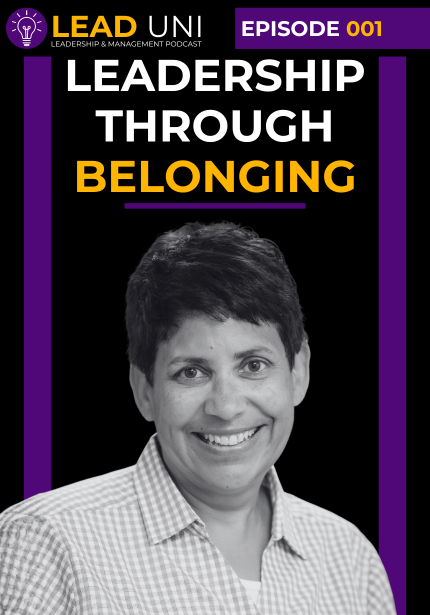
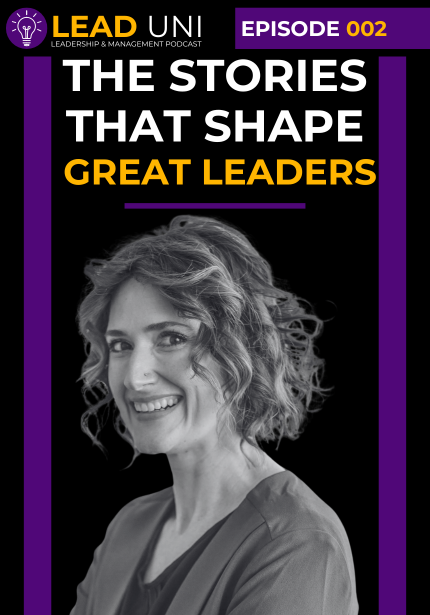
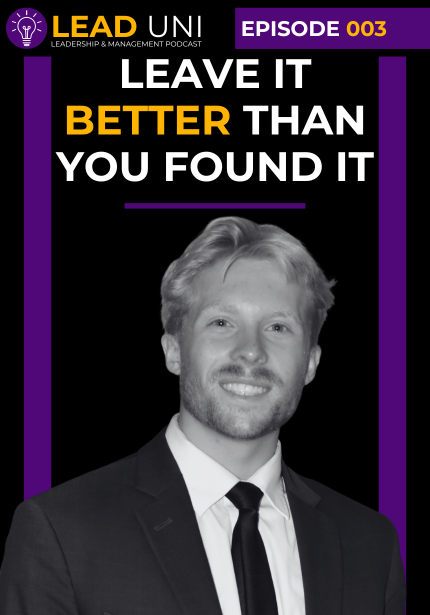
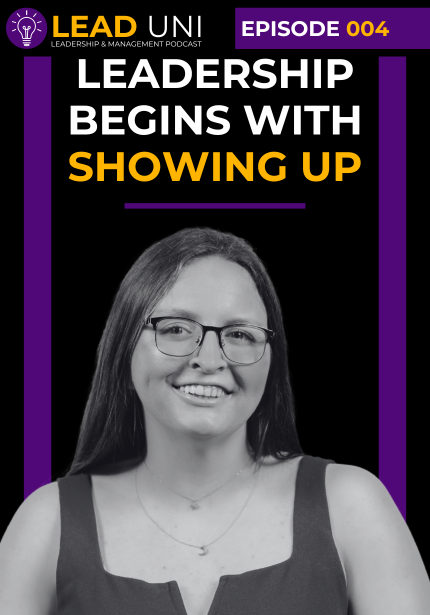
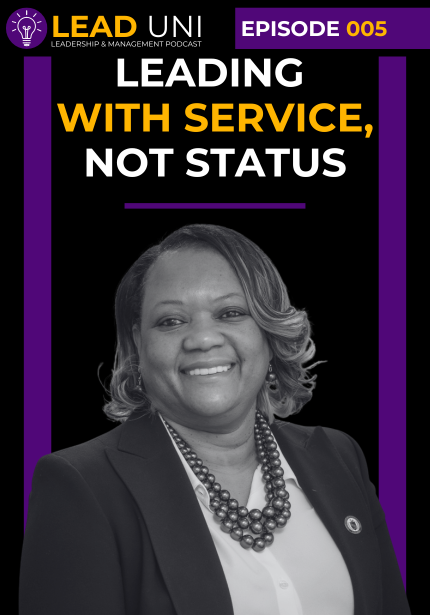
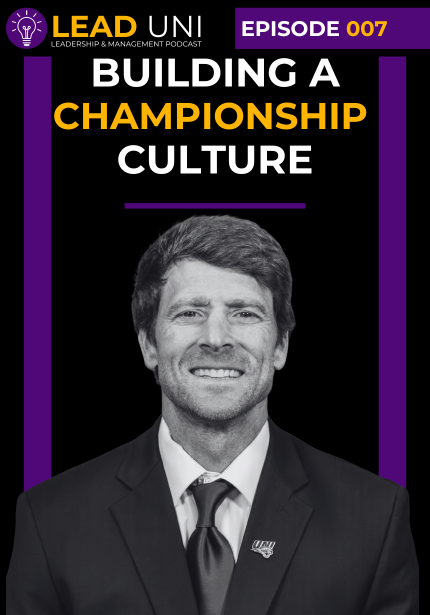
LEAD UNI Podcast
Leadership is everywhere. LEAD UNI explores the real experiences of leaders across the University of Northern Iowa - sharing the stories, lessons, and perspectives that help all of us become better leaders. Each episode of LEAD UNI features a leader sharing the experiences that have shaped how they work, lead, and serve others. LEAD UNI is built around four principles:
- Learn - Leadership begins with curiosity. Learn from experience, challenges, mistakes, mentors, and the people around you.
- Engage - Leadership is relational. Engage with your team, your community, new ideas, and perspectives different from your own.
- Advance - Leadership requires action. Advance yourself, your team, your organization, and the work that matters.
- Develop - Leadership is ongoing. Develop your skills, your people, your relationships, and the next generation of leaders.

Managers Can Help Employees Hone Soft Skills SHRM
"Just as athletes have practice time, employees have role playing for practice. Game time is when employees use their newly developed soft skills to deliver a presentation or interact with a client."
Why Time Management Techniques Fail High-Achievers Forbes
"The bottom line is that most time management techniques don’t adequately account for values and the intensity of real-world pressures and externalities. It’s on each of us individually to have the harder conversation first: what really matters to me?"
The Covey Time Management Matrix Explained Indeed
"Proper time management is important to increasing personal productivity. This technique is an effective method meant to focus your attention on the tasks that matter most to your business and personal growth."

Productivity for Mortals | Oliver Burkeman (8:03)
Oliver Burkeman challenges the mindset of feeling stuck in the pursuit of perfection, urging us to see through the illusion and embrace our limitations.
Maximize Productivity With These Time Management Tools (9:02)
Dr. Cal Newport shares insights on time blocking and discusses fixed schedule productivity, deep work, and how focusing on long-term consistency over daily hustle can lead to greater productivity and sustainable success.
We’re Overcomplicating Time Management (13:54)
Samantha Lane shares how a life-changing medical crisis led her to simplify time management through her Prioritize, Plan, Protect framework. She explains how intentional planning can create greater balance, and productivity without sacrificing what matters most.

Time Management for Managers
When you begin to manage people, organizing your time reaches a whole new level of complexity - team members may need more time with you than you're anticipating, direct reports may frequently come by your desk with questions, and you may receive more emails than you can keep up with. As a manager, you want to make sure you're being productive with your time while setting a good example for your team. Dave Crenshaw covers time management best practices for managing people, including delegating tasks, managing expectations, and establishing productive one-on-one meetings. He also provides helpful tips for managing projects, including how to coordinate multiple projects, allocate scarce resources, hold a team accountable to deadlines, and communicate deadline changes when necessary.

Managers Can Help Employees Hone Soft Skills SHRM
"Just as athletes have practice time, employees have role playing for practice. Game time is when employees use their newly developed soft skills to deliver a presentation or interact with a client."
Why Time Management Techniques Fail High-Achievers Forbes
"The bottom line is that most time management techniques don’t adequately account for values and the intensity of real-world pressures and externalities. It’s on each of us individually to have the harder conversation first: what really matters to me?"
The Covey Time Management Matrix Explained Indeed
"Proper time management is important to increasing personal productivity. This technique is an effective method meant to focus your attention on the tasks that matter most to your business and personal growth."
Productivity for Mortals | Oliver Burkeman (8:03)
Oliver Burkeman challenges the mindset of feeling stuck in the pursuit of perfection, urging us to see through the illusion and embrace our limitations.
Maximize Productivity With These Time Management Tools (9:02)
Dr. Cal Newport shares insights on time blocking and discusses fixed schedule productivity, deep work, and how focusing on long-term consistency over daily hustle can lead to greater productivity and sustainable success.
We’re Overcomplicating Time Management (13:54)
Samantha Lane shares how a life-changing medical crisis led her to simplify time management through her Prioritize, Plan, Protect framework. She explains how intentional planning can create greater balance, and productivity without sacrificing what matters most.
Time Management for Managers
When you begin to manage people, organizing your time reaches a whole new level of complexity - team members may need more time with you than you're anticipating, direct reports may frequently come by your desk with questions, and you may receive more emails than you can keep up with. As a manager, you want to make sure you're being productive with your time while setting a good example for your team. Dave Crenshaw covers time management best practices for managing people, including delegating tasks, managing expectations, and establishing productive one-on-one meetings. He also provides helpful tips for managing projects, including how to coordinate multiple projects, allocate scarce resources, hold a team accountable to deadlines, and communicate deadline changes when necessary.
Learning Opportunities in 2026
The Employee Engagement Series and Manager Development Series offer different opportunities for professional growth at UNI.
The Employee Engagement Series is open to all UNI employees and explores topics related to personal and professional growth, workplace engagement, well-being, and connection. Sessions are designed to spark curiosity, encourage reflection, introduce new perspectives, and create opportunities to learn from and connect with colleagues across campus.
The Manager Development Series is designed for UNI managers and leaders. These sessions focus on the practical skills and responsibilities involved in leading people and teams, including building high-performing teams, managing meetings, navigating workplace conflict, and supporting employee performance and accountability. Workshops provide practical tools and opportunities to reflect on leadership practices and learn from others in similar roles.
Together, the two series support continuous learning across UNI - providing opportunities for all employees to grow while offering targeted development for those responsible for leading others.
Wait...It Can Do That? Practical Applications of Generative AI
September 9 at 11:00am in Rod Library's ScholarSpace
Generative AI is evolving rapidly, offering new ways to work smarter and more creatively every day. In this session, you’ll see real examples of how generative AI can support communication, organization, research, and design tasks in the workplace. We’ll walk through practical tools available to you at UNI and explore how to use them effectively in everyday situations where you might need an extra hand. This is a hands‑on session. Bring your laptop to try out the tools as we go! Led by Wilson Rojas.
Register for Practical Applications of Generative AI
"I'm fine. It's fine. Everything is fine." And other things we tell ourselves when life is chaos.
September 22 at 11:00am in Rod Library's ScholarSpace
There are a ton of self-help books about balancing life and work, but many times I am more encouraged when I hear what's actually working for my friends and colleagues. This is a session for all of us to share challenges of being a working parent, grandparent, pet parent, caregiver, new/seasoned professional and how we are manage (or don't manage) it all. Come ready to share and to learn from one another. Led by Heather Asmus.
Register for "I'm fine. It's fine. Everything is fine."
Panther PechaKucha
October 9 at 1:30pm in Sabin 002
Join us for Panther PechaKucha, a dynamic storytelling event where six faculty and staff from across campus each present 20 images for 20 seconds each, creating engaging presentations. Through stories of work, leadership, and personal experiences, you'll gain fresh perspectives and connect with the people who make our Panther community unique.
Register for Panther PechaKucha
Trendspotting 101: What’s Up with Today’s College Students
October 14 at 2:00pm in Rod Library's ScholarSpace
Today’s incoming college students are bringing new expectations, experiences, and needs to campus. This session explores the trends shaping academic advising and career services, along with practical strategies for building student motivation, strengthening engagement, and helping learners take ownership of their academic and career journeys. Come ready to explore fresh perspectives and ideas for connecting with students in authentic, inclusive, and meaningful ways. Led by Sarah Goblirsch and Jenny Connolly.
Register for Trendspotting 101
Keeping Hope Close
October 9 at 1:30pm in Sabin 002
How do we hold on to hope when so much of what we see and hear can leave us feeling hopeless? This engaging session explores hope as something we can actively build through goals, pathways, and personal agency. Together, we’ll explore practical H.O.P.E. strategies, reflect on the sources of hope closest to us, and consider how we can use our own agency to inspire hope in others. Come ready for conversation, reflection, and a renewed sense of the difference we can make. Led by Ashley Coffin.
FLSA/Time Reporting
September 15 at 3:00pm on Zoom
October 19 at 8:30am on Zoom
Supervisors of non-exempt (hourly) staff will learn about the requirements of the Fair Labor Standards Act (FLSA) and UNI time reporting. It is a manager's role to ensure compliance with these regulations; this session is being offered to support managers in this area.
Register for FLSA/Time Reporting
Building High Performing Teams
September 15 at 11:00am in Gilchrist 009
Strong teams don’t happen by accident - they are built through intentional leadership, clear expectations, trust, and meaningful connection. This session explores the foundations of high-performing teams and the role managers play in creating an environment where employees can collaborate, contribute, and succeed. Participants will explore strategies for strengthening team dynamics, building trust, navigating different work styles, and fostering a culture of accountability and engagement. Come ready to reflect on your current team practices and identify opportunities to help your team thrive.
Register for Building High Performing Teams
Meetings That Matter
October 21 at 1:00pm in Gilchrist 009
Meetings are a regular part of work - but they don’t always feel like a productive use of time. This session explores how managers can design and lead meetings that create clarity, encourage participation, and move work forward. Participants will examine common meeting challenges, explore strategies for improving meeting purpose and structure, and consider how to create more engaging and effective conversations. Come ready to rethink your meetings and identify practical ways to make them matter.
Register for Meetings That Matter
Navigating Workplace Conflict
November 10 at 9:00am in Gilchrist 009
Conflict is an inevitable part of working with others - but avoiding it rarely makes it disappear. This session explores how managers can recognize, understand, and navigate workplace conflict with greater confidence and intention. Participants will examine common sources of conflict, consider how different perspectives and communication styles shape difficult situations, and explore strategies for having productive conversations when tensions arise. Come ready to build your confidence in addressing conflict and turning challenging moments into opportunities for understanding and progress.
Register for Navigating Workplace Conflict
Managing Performance with Purpose
December 1 at 11:00am in Gilchrist 009
Effective performance management is about more than completing an annual review - it is an ongoing process of setting clear expectations, providing meaningful feedback, recognizing progress, and addressing challenges. This session explores how managers can approach performance management as a tool for employee growth and organizational success. Participants will examine strategies for creating clarity, holding employees accountable, and engaging in the conversations that help employees understand what success looks like and how to achieve it. Come ready to rethink performance management as an ongoing practice that supports both accountability and development.
Our Vision
All employees will be positively engaged in achieving their greatest potential while contributing to the success of the university.
Our Mission
Human Resource Services fosters and environment of integrity and collaboration through innovative solutions and communications contributing to the successful recruitment, development, and retention of university employees.