
Performance Development
Performance development is an ongoing partnership between managers and employees. It is not limited to the annual performance review. Effective performance development includes:
- Establishing clear expectations
- Providing regular feedback and coaching
- Setting meaningful goals
- Recognizing accomplishments and progress
- Addressing performance concerns early
- Documenting performance throughout the year
- Completing meaningful performance reviews
The goal is simple: employees should understand what is expected of them, receive regular feedback about their performance, and have the support necessary to be successful.
HRS is Your Performance Development Partner
Managers and employees are encouraged to contact Human Resource Services (HRS) for guidance at any point in the performance development process.
Do not wait until the annual performance review to contact HRS about a performance concern. Early consultation can help managers address concerns proactively and provide employees with a clearer path to success. Contact HRS for assistance.
HRS can assist with:
- Establishing or clarifying performance expectations
- Preparing for difficult performance conversations
- Providing feedback and coaching
- Addressing performance concerns
- Determining appropriate next steps when performance does not meet expectations
- Understanding performance improvement and disciplinary processes
Setting Expectations
 Employees are more likely to be successful when they understand:
- What is expected of them
- Why the work matters
- What successful performance looks like
- How their work connects to team and institutional priorities
- What support and resources are available to them
Managers should communicate expectations clearly and directly, invite questions, and confirm a shared understanding of priorities. Expectations may include job responsibilities, work processes, communication, attendance and call-in procedures, service standards, performance metrics, teamwork, or other requirements of the position.
Managers should also communicate what employees can expect from them, including regular communication, feedback, support, and opportunities for development.
If an expectation is important, communicate it clearly. Employees should not be expected to meet standards that have never been communicated.
Build Accountability Through Support and Follow-Through
Accountability is a shared responsibility.
Managers establish the conditions for success by:
- Setting clear expectations and goals
- Providing the resources and training employees need
- Giving timely feedback
- Recognizing progress and accomplishments
- Addressing concerns consistently
- Following through on commitments
Employees contribute by:
- Understanding their responsibilities
- Asking questions when expectations are unclear
- Following through on commitments
- Seeking feedback
- Taking ownership of their performance and development
Accountability is not something that managers do to employees. It is a process that helps employees understand expectations, take ownership of their work, and make progress toward successful performance.

Coaching
Coaching helps employees identify challenges, consider possible solutions, and develop their ability to address situations independently. Managers should coach all employees - not only employees who are experiencing performance problems. The GROW model can help structure coaching conversations:
- Goal - What do you want to accomplish?
- Reality - What is happening now?
- Options - What possible approaches could you take?
- Will - What will you do, and how will you follow through?
Learn more about the benefits of coaching, check out Coaching Skills for Leaders and Managers by Sara Canaday on LinkedIn Learning.
Feedback
Effective feedback should focus on outcomes. This means recognizing wins, large and small, to help employees identify positive patterns within themselves they can recreate and refine. Critical feedback rarely improves performance; therefore, focus should be on highlighting people’s strengths and efforts to empower them to do their best work. If critical feedback must be given, we recommend asking open-ended questions and using the Situation-Behavior-Impact (SBI) model to guide those conversations:
Situation - What happened and when?
Behavior - What did you observe?
Impact - What effect did it have?
Avoid making feedback about personality, character, or assumed intent. Focus on observable actions, results, and expectations.
Performance concerns should be addressed when they occur. Employees should not first learn about a significant performance concern during their annual review.
Finally, managers must be open to receiving feedback. We cannot expect employees to receive feedback if managers are not open to do so as well.
Establishing Goals
Goals provide direction, establish priorities, and help employees and managers define what success looks like. Effective goals should:
- Align with the responsibilities of the position
- Support team or institutional priorities when appropriate
- Be realistic and attainable
- Be discussed collaboratively
- Be reviewed regularly
- Be adjusted when priorities or circumstances change
Performance goals provide employees with direction and understanding of their job duties, responsibilities, and help establish priorities. Goals can be short-term, long-range, individual or team-oriented, and focus on processes, performance and/or outcomes. They should be collaborative and take the employee’s career aspirations, abilities, and resources into account.
Types of Goals:
- SMART (Specific | Measurable | Attainable | Relevant | Time-based)
- PACT (Purposeful | Actionable | Continuous | Trackable)
| SMART GOALS | PACT GOALS |
|---|---|
| Can include long-term and short-term goals. | Long-term goals with short-term actions. |
| Focuses on outcomes. | Focuses on outputs/efforts. |
| Breaks down major goals into actionable steps or smaller goals. | Does not require planning and actionable steps can be taken immediately. |
| Variables may not be within the employee’s control. | Based on things the employee can control. |
| e.g. "Secure $100k in dollars closed by the end of the Spring semester." OR "Increase training participation over the next academic year by 10%." | e.g. “Make 10 cold calls per week until we have secured $100k in dollars closed.” OR "Personally invite at least 5 potential training participants for each training over the next academic year until participation increases at least 10%." |
A combination of outcome-focused and action-focused goals can be useful. Managers and employees should review goals regularly rather than waiting until the end of the review period.
Documenting Job Performance
Managers should maintain accurate documentation of performance throughout the review period.
Documentation can include:
- Performance discussions
- Examples of accomplishments
- Recognition or commendations
- Progress toward goals
- Coaching conversations
- Specific performance concerns
- Training or development activities
Effective documentation is:
- Specific
- Objective
- Accurate
- Based on observable behavior or results
- Connected to established expectations
Avoid relying solely on memory when completing a performance review. Maintaining documentation throughout the year helps managers evaluate the full review period and reduces the risk of recency bias.
Employees should also maintain their own records of accomplishments, goals, projects, and development activities. This information can help employees actively participate in performance conversations.
Performance documentation should support ongoing communication - not replace it.
Staff Performance Review Process

- Two-Week Performance Discussion
- Three-Month Performance Review
- Six-Month Performance Review
- Annual Performance Review
For P&S staff, annual reviews occur during spring semester.
NOTE: The reviews conducted at the third and sixth months are extremely important since they are issued during the probationary period. Once an employee has reached the end of their probation, they automatically become permanent employees - regardless of whether or not a review is completed. Therefore, it is imperative that managers complete these reviews in a timely manner and reach out to HRS if there are any performance concerns which may lead to a release from probation.
Completing the Performance Review Form
When a performance review is initiated in UNI Works by HRS, there are several steps that need to be completed before the review is finalized:
1 - Employee Self-Review. The employee completes the self-review to share their perspective on their performance during the review period. It's useful for the employee to acknowledge their accomplishments and identify how they have sought methods of improvement.
2 - Manager Review of Employee. Managers should consider whether the employee met their goals and expectations for the review period. Were there any external circumstances, like new objectives, staff vacancies, or technical difficulties, that limited the employee’s ability to meet those goals? How did the manager provide the employee with feedback and coaching throughout the year? Do you have records of specific examples of successes, improvements, or weaknesses? All of this information should be included in the performance review.
Avoid making generalized statements, focus on facts not feelings, and address the established performance expectations. Additionally, raters should avoid relying on memory as this can allow rater errors and biases to invade the process. All comments made should be meaningful and consistent with performance ratings. Examples of observed behaviors, positive and negative, should be given to support all ratings. Share examples to demonstrate how expectations were not met if a rating of "Below Expectations" is assigned. Managers should include what actions the employee can take to increase their performance for the upcoming review period.
3 - Acknowledgements. After the manager writes and submits the review, it will go back to the employee for acknowledgement. This provides the employee an opportunity to respond or share additional information from their perspective. After this the review will go to the manager and the next-level manager for additional acknowledgements.
4 - HRS Finalization. HRS will review the performance review for content prior to finalization.
Effective and Ineffective Review Statements
| Ineffective Statements/Verbiage | Effective Statements |
|---|---|
| You are really organized. | Your organizational skills are strong. You take detailed notes, maintain your calendar up-to-date, and keep everyone informed of scheduling changes in a timely manner. This positively impacts the entire team and promotes efficiency. Great job! |
| You have a bad attitude. | I have observed you speaking to your peers using a negative tone, refusing to respond when being spoken to, and raising your voice when team members disagree with you. This creates an unprofessional work environment and is not conducive to building and maintaining good working relationships. Moving forward, you are expected to treat others with respect and strive to maintain professional standards at all times. |
| Always/Never | Using absolutes compromises your credibility. Stick to terms such as “often,” “regularly,” or “rarely.” Better yet, provide specific dates and/or examples such as, “Over the last 3 months I have observed you come in late on 10 separate occasions.” |
| To be honest/No offense/I’m sure you… | Avoid priming statements that can put somebody on the defensive and/or assume negative or positive intent. |
Remember, certain information is never appropriate to include in a performance review. For example, there should be no mention of an employee’s medical information, naming of other employees, use of protected leave terms such as FMLA/ADA, or any other terms regarding an employee’s protected class or personally identifying information (age/color/race/disability/national origin/religion/sex/sexual orientation/political affiliation/marital status, etc.)
Performance Review Meetings
Managers should provide employees adequate time to review the performance review before meeting to discuss it. To learn more about how to prepare and become an active participant in your performance review, employees can read the How to Prepare for and Participate in Your Performance Review supporting webpage. Employees and managers may also reach out to HRS to request guidance.
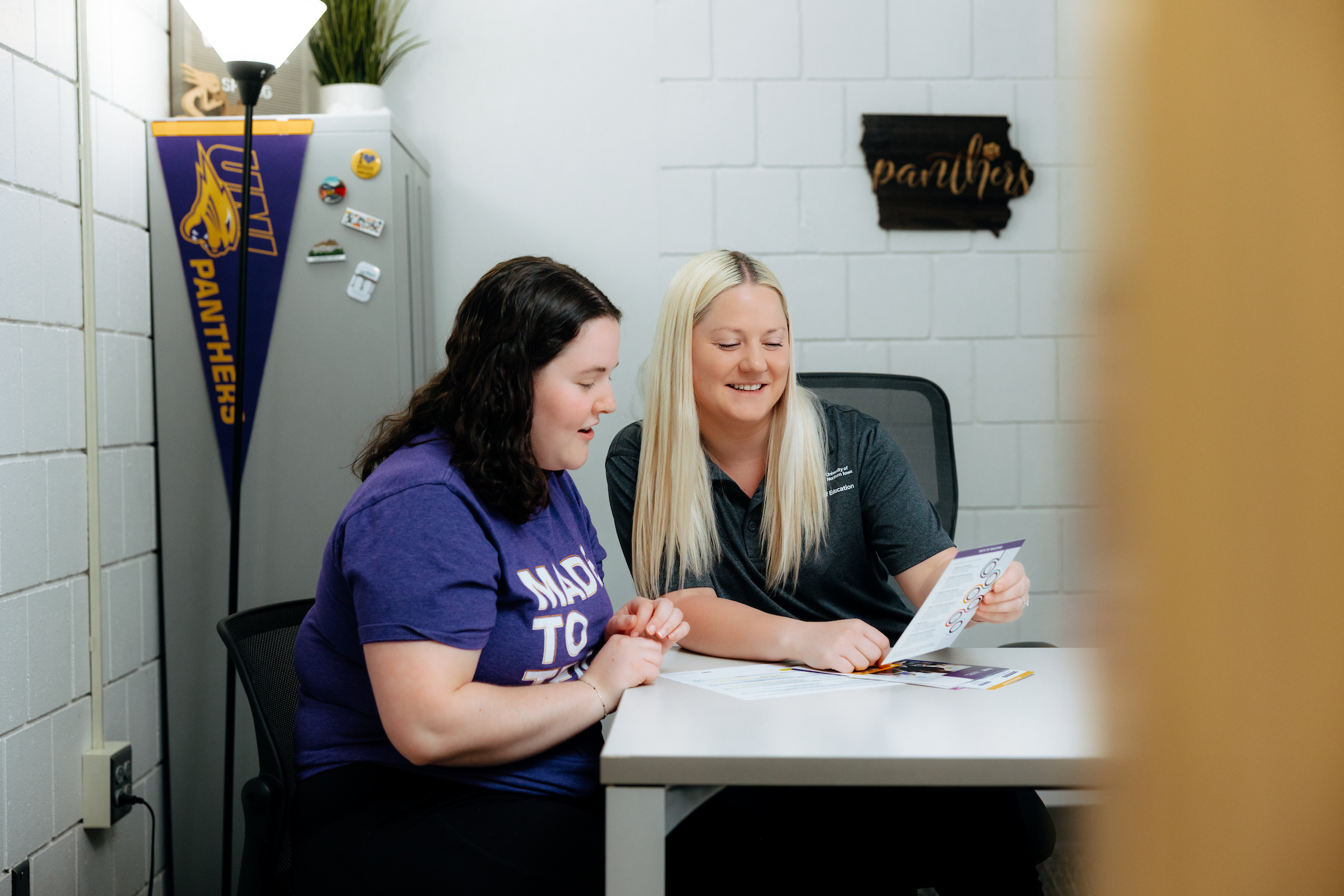 The meeting should be:
- Scheduled at a mutually convenient time
- Held in a private setting
- Long enough to allow for meaningful discussion
- Focused on both the employee's performance and future development
The goal is to establish a shared understanding of the review, discuss questions or concerns, and identify priorities moving forward.
Employees may agree or disagree with portions of a performance review. Employees should be able to provide examples to support why they may agree or disagree with any portion of the review. While managers are instructed to take the information an employee provides into consideration, this may not always result in changes to the final ratings. Employees have the opportunity to provide final comments and elaborate as to why they may or may not agree with any portion of the review.
An employee's signature acknowledges receipt and discussion of the review; it does not necessarily indicate agreement with the ratings or comments.
When Performance Concerns Arise
Performance concerns should be addressed promptly and directly.
The appropriate response will depend on the circumstances, including:
- The nature and seriousness of the concern
- The employee's prior performance
- The expectations that were communicated
- Previous coaching or feedback
- Whether the employee has had a reasonable opportunity to improve
- Applicable policies and procedures
Managers should contact HRS for guidance when they have concerns about an employee's performance or are considering next steps for performance management. Early consultation can help managers determine an appropriate and consistent approach for the university.
Performance Improvement Plans
 A Performance Improvement Plan (PIP) is a supportive measure (not a punitive measure) designed to assist an underperforming employee achieve successful performance. A PIP can be implemented any time and may sometimes follow the yearly performance review process. On average, the duration of a PIP ranges anywhere between 30 to 90 days; however, this can vary and is assessed on a case-by-case basis. There may also be times when PIP extensions are necessary. A successfully implemented PIP will have the following components:
- A thorough summary of any/all performance deviations and/or deficiencies.
- A detailed plan outlining the specific requirements and steps the employee will need to take in order to achieve success.
- A plan for check-ins, additional training requirements and/or any assistance that may be needed to ensure the employee can be successful.
While PIPs are designed to assist employees be successful, we understand some may be apprehensive about the process. To reduce this fear, we encourage managers to include employees in the process, maintain open channels of communication, and follow-up frequently.
Contact Information
Jesse Heath
Employee Relations Coordinator
(319) 273-6219
jesse.heath@uni.edu OR hrs-performance@uni.edu